Have a project for us?
DO YOU HAVE ANY QUESTIONS REGARDING YOUR NEXT CONSTRUCTION PROJECT?
Published on: Apr 05, 2026
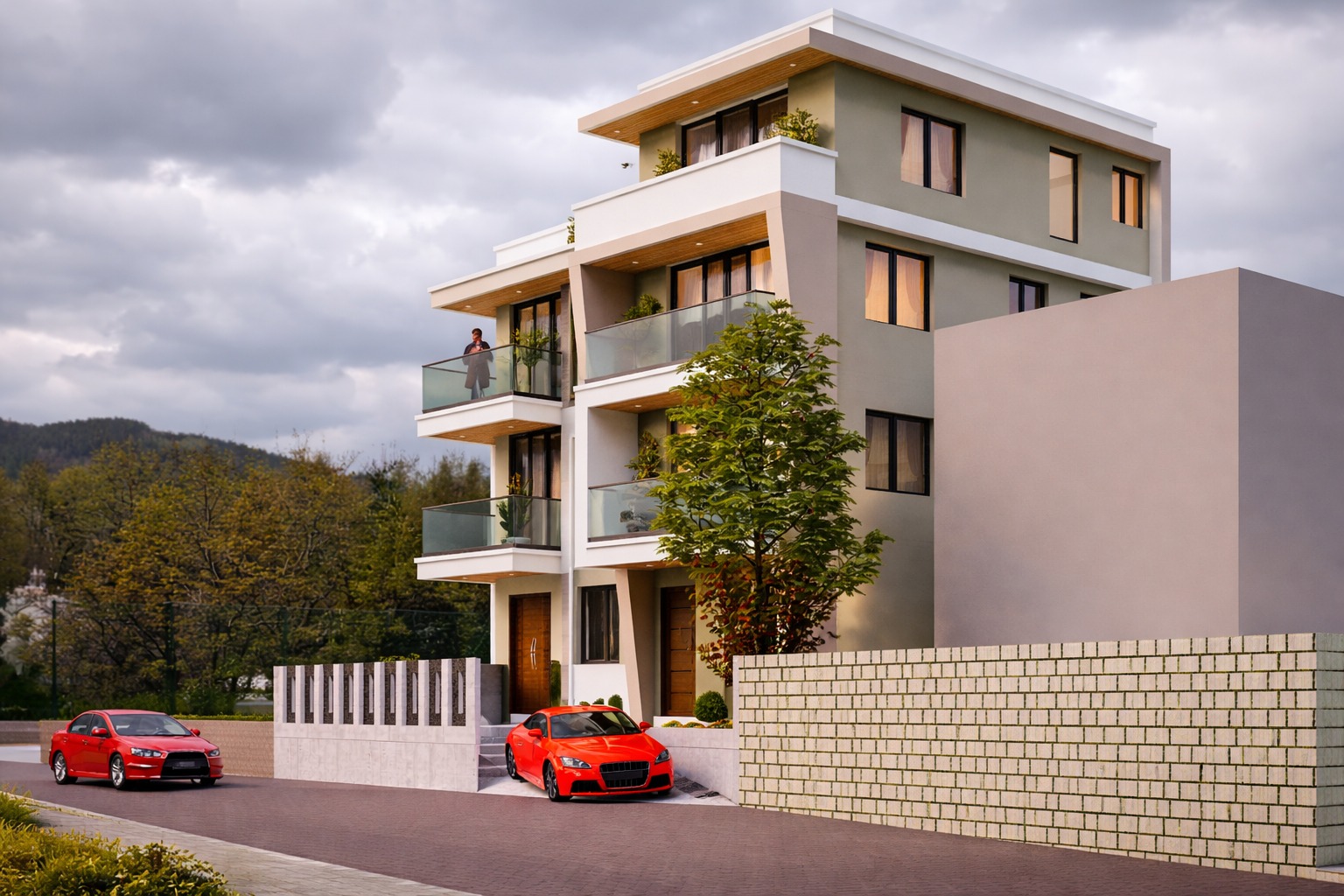
A 3.5 floor house typically Ground Floor + 1st Floor + 2nd Floor + a half-storey (attic/mezzanine) is one of Nepal's most popular residential formats. It maximizes vertical space on smaller urban plots while providing room for a growing family, rental income, or a home office. This guide breaks down everything: estimated costs, legal requirements, construction phases, and practical tips especially when working with a reliable construction company in Nepal or choosing from the top construction companies in Nepal for residential projects for a smooth building experience.
Whether you are building in Kathmandu, Pokhara, or another city, a 3.5 storey house represents one of the smartest investments a Nepali homeowner can make. Rising land prices in urban centres mean building upward is often the only financially viable option, and 3.5 floors gives you significantly more floor space without requiring a dramatically larger plot. But how much does it actually cost and how do you navigate the process from a blank plot to a finished home with the help of a professional construction company in Nepal or by hiring one of the top construction companies in Nepal for turnkey house construction?
In Nepali residential construction, a "3.5 floor" (साढे तीन तल्ले घर) means a building with three complete storeys plus a half-storey at the top. The half-storey is typically a partially enclosed space with a sloped or partially raised roof that can serve as an attic room, rooftop garden area, prayer room (puja kotha), or utility space.
Typical layout of a 3.5 floor Nepali residential house — Ground + 1st + 2nd Floor + Half Storey
This configuration is especially common in Kathmandu, Bhaktapur, Lalitpur, and Pokhara, where plots are often 3–6 aana in size. A standard 3.5 storey RCC (Reinforced Cement Concrete) framed structure complies with the Nepal National Building Code (NBC) and is designed to withstand seismic activity a must-have in Nepal's earthquake-prone geography. Most homeowners prefer hiring an experienced construction company in Nepal or selecting from the top construction companies in Nepal known for earthquake-resistant construction to ensure full compliance with NBC standards.
Construction costs in Nepal vary significantly based on location, finish quality, and the size of the plot. The cost per square foot in 2025 ranges from NPR 3,000 (basic) to NPR 6,500+ (premium), excluding land. Below is a realistic breakdown for a mid-range 3.5 floor house built on a 3–4 aana plot in Kathmandu Valley, often executed by a mid-range construction company in Nepal or even some of the top construction companies in Nepal offering affordable packages.
These are indicative estimates for planning purposes. Actual costs depend on your specific location, design, contractor, soil conditions, and current market rates. Always get a detailed Bill of Quantities (BOQ) from a licensed contractor or a trusted construction company in Nepal or consult with the top construction companies in Nepal for accurate cost estimation before finalising your budget.
A simple, rectangular house design costs significantly less than one with curves or irregular shapes. Choosing a clean design can save 10–20% on structural costs something most professionals from the top construction companies in Nepal for budget-friendly home design strongly recommend.
Material costs make up roughly 55–65% of the total construction budget. Many homeowners working with the top construction companies in Nepal for material sourcing benefit from bulk discounts and supplier networks.
For foundations, columns, beams, and plaster.
NPR 800–950/bag (50 kg)For reinforcement in RCC structure.
NPR 90,000–1,10,000/tonneLocal clay bricks or concrete blocks for walls.
NPR 12–20 per brickRiver sand and crushed stone for concrete.
NPR 2,000–4,000/cubic ftCeramic, porcelain, or vitrified tiles.
NPR 60–300/sq. ft.Energy-efficient, low-maintenance; preferred mid-range choice.
NPR 600–1,200/sq. ft.Asian Paints Tractor or Berger are popular choices.
NPR 80–300/sq. ft.Branded faucets, sanitary ware, and pipes.
NPR 80,000–3,00,000 totalBuilding a 3.5 floor house in Nepal follows a well-established sequence. Most homeowners today prefer hiring a construction company in Nepal or selecting from the top construction companies in Nepal for complete project management services to manage this entire process professionally.
Before any design work begins, a licensed civil engineer must assess your plot. Soil bearing capacity determines foundation depth and type critical in Kathmandu Valley where many areas have soft alluvial soil. Cost: NPR 15,000–50,000.
A registered architect prepares floor plans, elevations, and structural drawings. For a 3.5 floor house, this includes layout of all floors, staircase design, and the half-storey treatment. Ensure your design is optimised for natural light and ventilation. Cost: NPR 40,000–1,50,000.
Submit architectural and structural drawings to your local municipality (Nagarpalika or Gaunpalika) for approval a process called "Naksa Pass." In Kathmandu Metropolitan City, this takes approximately 25–30 days. KMC charges approximately NPR 25/sq. ft. for residential buildings. Construction cannot legally begin without this permit.
Excavation, levelling, and foundation work. For a 3.5 floor house, a well-reinforced RCC foundation is critical. The foundation cost is often equivalent to casting two floors. Duration: 4–8 weeks.
Construction of columns, beams, brick walls, and the first slab. All RCC work must follow NBC 105 seismic design standards. Duration: 6–10 weeks per floor.
Each floor follows the same cycle: columns, formwork, slab casting, brick infill, and window/door frames. The half-storey involves a partial wall height with a sloped or flat roof above. Duration: 5–8 weeks per floor.
Terrace waterproofing is essential in Nepal's heavy monsoon climate. Torch-on membranes or crystalline waterproofing systems are recommended for the final slab. The half-storey roof needs particular attention as it transitions between enclosed and open space.
Rough-in plumbing and electrical are done before plastering. Once walls are plastered and dried, flooring, fixtures, painting, and kitchen installations follow. Duration: 8–14 weeks.
After construction is finished, apply to your municipality for a Completion Certificate. The local authority conducts a field verification to ensure the building matches the approved drawings. This document is important for future property transactions.
A typical 3.5 floor house in Nepal takes 18 to 30 months to complete, depending on monsoon delays, labour availability, and the owner's decision-making speed. Plan your construction start in October–November (post-monsoon) for the best working conditions.
Nepal's building regulations exist primarily to ensure earthquake safety. Nepal lies in one of the most seismically active zones in the world, and the devastating 2015 Gorkha Earthquake underscored why compliance with the Nepal National Building Code (NBC) is not optional it is life-saving.
Never cut corners on structural steel reinforcement (rebar), column sizing, or beam-to-column connections. These are the elements that keep a building standing in an earthquake. Hire a structural engineer to supervise all RCC work independently of your contractor.
A well-designed 3.5 floor house on a 3.5–4 aana plot can comfortably accommodate a joint family or provide a floor for rental income. Here is a typical floor-by-floor programme:
Thoughtful placement of the staircase is critical in a multi-storey Nepali home. A central staircase is efficient but consumes valuable floor space. Consider a corner staircase with a landing to maximise the usable area on each floor.
The permissibility of a 3.5 storey structure depends on your local municipality's bylaws and zoning regulations. In Kathmandu Metropolitan City and most urban municipalities, 3.5 floors is generally allowed on residential plots. Always confirm with your ward office before purchasing land or finalising a design.
No. Constructing without a permit is illegal in Nepal and can result in demolition orders, heavy fines, and legal complications when you try to sell or transfer the property. The permit also protects you legally and ensures your building is on official records.
Kathmandu Metropolitan City (KMC) has a Single Building Permit System. Once your contractor submits the application electronically with all required drawings, the process takes approximately 25–30 days, provided your design complies with all codes and your neighbours give consent.
Yes. Most Nepali commercial banks and development banks offer home construction loans. The bank will typically disburse funds in stages as construction progresses, verified by inspections. You will need your Lal Purja, approved Naksa, and a BOQ from your contractor to apply. Consult your bank early to understand the documentation requirements.
The post-monsoon period (October to December) is ideal. You get dry weather for foundational and structural work, and several months of good working conditions before the pre-monsoon heat of March–May. Avoid starting foundations in June–September due to waterlogging and flooding risks.
Both approaches work. A reputable construction company offers fixed-price packages (from NPR 3,000–4,300/sq. ft.) with warranties and project management. Hiring individual trade contractors can save money but requires more involvement and oversight from you. For most owner-builders, a combination works best: hire a construction company for structural work and manage finishing trades separately.
Building a 3.5 floor house in Nepal is a significant undertaking financially, logistically, and emotionally. But done right, it is also one of the most rewarding investments you can make. A well-designed, earthquake-safe, code-compliant 3.5 storey home will serve your family for generations and retain strong market value in Nepal's growing cities.
The keys to success are straightforward: invest in good design upfront, get your permits in order before breaking ground, hire qualified professionals for structural work, and stay actively involved in the project. Your dream home is absolutely achievable plan carefully, build safely, and enjoy every step of the journey.