Have a project for us?
DO YOU HAVE ANY QUESTIONS REGARDING YOUR NEXT CONSTRUCTION PROJECT?
Published on: Jun 07, 2026
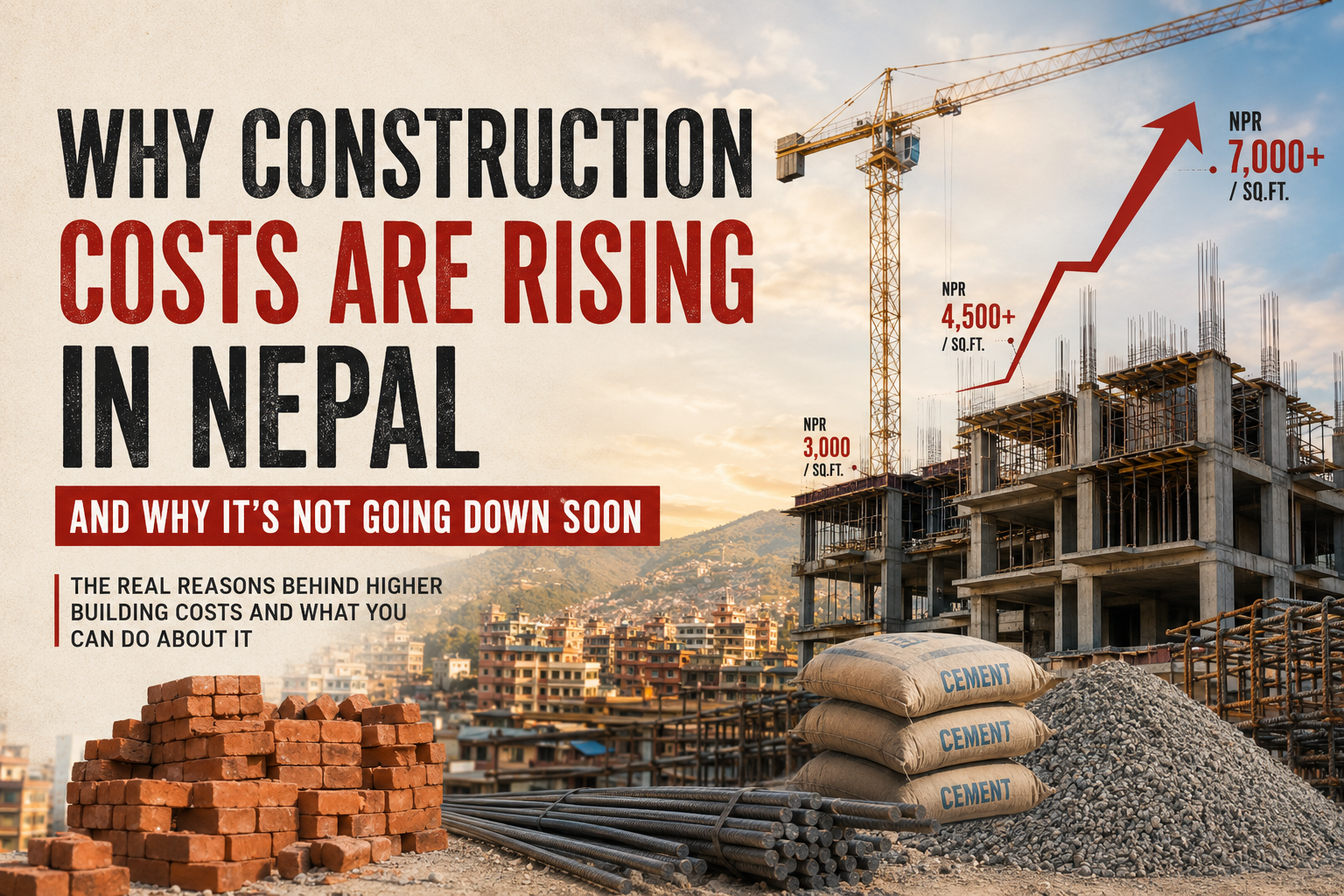
If you have tried to build a house in Nepal in the last few years, you already know that the budget you planned even two years ago is no longer enough today. What used to cost NPR 3,000 per square foot is now pushing NPR 4,500 or more, and premium builds are touching NPR 7,000 and above. People often blame contractors or assume someone along the way is making extra money. The truth is more complicated, and understanding it can actually help you plan smarter.
Here is what is really driving construction costs up in Nepal, and why it is unlikely to reverse anytime soon.
Materials Cost More, and It Is Not Just Inflation
One of the most underappreciated drivers of construction costs in Nepal is the labor shortage. Nepal has historically relied on two sources of construction labor: local workers and skilled workers from India. Both are becoming harder to find and more expensive to hire.
When workers are scarce, they charge more. That is basic economics, and it is playing out every day on construction sites across Kathmandu, Pokhara, and beyond.
Fuel Prices Affect Everything, Not Just Vehicles
Think about what that means for a house built outside Kathmandu. Sand has to be trucked in. Bricks have to be transported. Steel rods have to move from factories to your site. Every kilometer of that journey costs more when fuel is expensive. The Nepal Freight Forwarders Association has noted that freight charges have increased significantly, and market prices for many goods could rise by up to 50 percent in some segments.
Urban Demand Is Outpacing Supply
Cities are growing faster than the infrastructure around them. More people are moving into Kathmandu Valley, Pokhara, and other urban centers. More families who have earned money abroad want to build proper homes. More NRNs are investing in property back home.
The Earthquake Factor Is Real and Necessary
Nepal sits in one of the most seismically active zones in the world. After the 2015 earthquake, building codes became stricter. That is a good thing. It means houses are safer. But it also means that cutting corners is no longer acceptable, and compliant construction costs more.
Government Taxes and Permit Fees Add Up
Building a home in Nepal is not just about buying materials and hiring workers. There are multiple layers of fees, permits, and taxes involved. Municipality-level building permits, engineer approval charges, road access fees, and material taxes all contribute to the final number.
If you are planning to build a house in the next one to three years, the most honest advice is this: costs are not going to drop significantly. The pressures driving them up are structural, not temporary. Fuel dependency, labor migration, urban demand, stricter safety codes, and import costs are all long-term realities.
What you can do is plan early, get accurate quotes from multiple contractors, lock in material prices where possible, and work with professionals who understand the current market. A well-planned build that accounts for today's realities will always be less stressful and more affordable than one that starts with an outdated budget.
At Ghar Durbar, we help Nepalis and Non-Resident Nepalis navigate the real cost of building in Nepal. Whether you are planning from abroad or starting from scratch locally, understanding these factors is the first step to building smart.
Construction costs in Nepal have increased due to rising prices of steel, cement, fuel, labor shortages, transportation expenses, stricter building codes, and growing urban demand for housing.
On average, standard residential construction now ranges from NPR 4,500 to NPR 7,000+ per square foot depending on design complexity, materials, location, and finishing quality.
Many skilled Nepali workers migrate abroad for higher-paying jobs, while the number of Indian laborers working in Nepal has also decreased, creating a shortage of experienced construction workers locally.
Yes, earthquake-resistant construction requires better structural design, higher-quality materials, proper reinforcement, and compliance with safety standards, which increases overall construction costs but ensures long-term safety.
Fuel prices impact transportation costs for materials like sand, bricks, cement, and steel. Since Nepal relies heavily on imported fuel, global oil price increases directly raise construction expenses.
Most experts believe construction costs are unlikely to drop significantly because the main factors driving prices upward labor migration, fuel dependency, import costs, and urban demand are long-term structural issues.
Building a house in Nepal today is very different from what it was even a few years ago. Rising construction costs are not caused by a single factor but by a combination of global market pressures, labor shortages, fuel dependency, urban expansion, stricter safety regulations, and increasing demand for quality housing.
While these realities may seem discouraging, they also highlight the importance of proper planning. A realistic budget, the right construction team, and clear understanding of current market conditions can save you from major financial stress later. Trying to build based on outdated estimates often leads to delays, compromises in quality, or unfinished projects.
The good news is that smart planning still makes a huge difference. By working with experienced professionals, comparing quotes carefully, and focusing on long-term value instead of short-term shortcuts, you can still build a safe, beautiful, and durable home that fits your goals and budget.
At Ghar Durbar, we help homeowners and NRNs make informed decisions throughout the construction journey from planning and design to budgeting and execution so you can build with confidence in Nepal’s changing market.