Have a project for us?
DO YOU HAVE ANY QUESTIONS REGARDING YOUR NEXT CONSTRUCTION PROJECT?
Published on: Apr 07, 2026
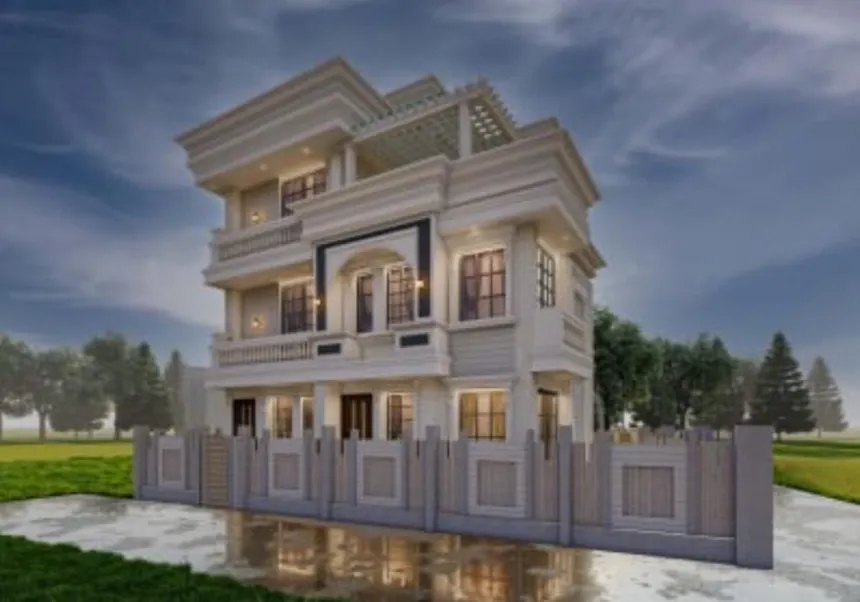
3 Aana (approximately 1,115 sq. ft. of land area) is the sweet spot for residential construction in Nepal's urban centres and an ideal starting point for practical house design in Nepal. It's large enough to build a spacious 2–3 storey home with parking, a garden, and room for the whole family yet compact enough to keep costs manageable. This guide, curated with inputs from experts in every major construction company in Nepal, walks you through every design choice you'll face, from architectural style to room layouts, vastu considerations, and what it all costs in 2025 for an efficient house design in Nepal.
Before diving into design, it helps to understand what 3 Aana actually means on the ground. In the hill measurement system used across Kathmandu Valley and much of Nepal, 1 Aana equals approximately 342.25 sq. ft. so 3 Aana gives you roughly 1,026–1,115 sq. ft. of land. In practical terms, this typically translates to a plot footprint of about 33 ft × 34 ft, though plot shapes vary widely—something that directly impacts house design in Nepal.
With a 70% coverage rule (applicable on plots up to 250 m²), you can build on roughly 780 sq. ft. per floor. Multiply that across 2–3 storeys and you're looking at 1,500–2,400 sq. ft. of total built-up area more than enough for a comfortable family home with space to spare when planned by an experienced construction company in Nepal specializing in house design in Nepal.
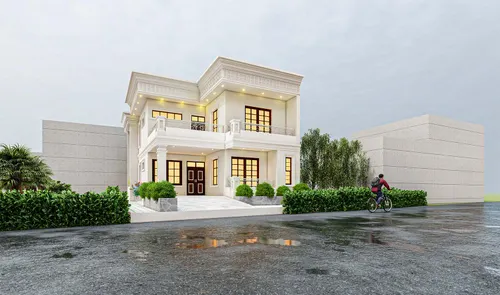
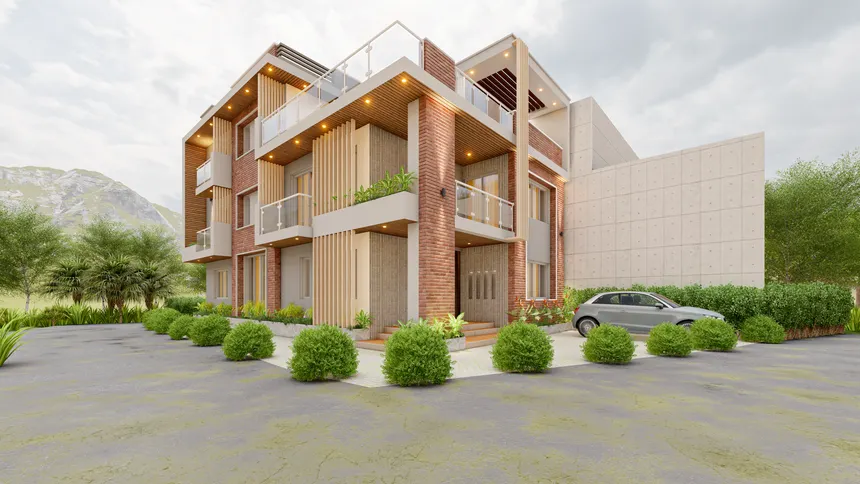
Walk through any established residential colony in Kathmandu, Lalitpur, or Bhaktapur, and you'll notice that 3 Aana plots are everywhere. There's a reason: this size hits the ideal balance between space, cost, and practicality for the average Nepali family, especially when planning a modern house design in Nepal.
The design style you choose will define the look of your home for decades. Nepal's residential architecture has evolved dramatically over the past 20 years, with homeowners now choosing from a wide range of aesthetics often recommended by a modern construction company in Nepal.
Your architectural style choice also affects your construction cost. Neoclassical and traditional Newari designs require more skilled craftwork (carved wood, decorative plaster) and can add 15–25% to the base construction cost compared to a clean contemporary design. Factor this into your budget early.
The number of storeys you build depends on your family size, budget, rental income goals, and the local zoning rules. Here are the most practical options for a 3 Aana plot, often implemented by a reliable construction company in Nepal:
Illustrative ground floor layout — actual dimensions vary based on your specific plot shape and design
A compact 2-storey design on a 3 Aana plot gives you roughly 1,500–1,600 sq. ft. of total space comfortably fitting 3–4 bedrooms, 2 bathrooms, a modern kitchen, a living-dining room, and parking. This is the most affordable multi-storey option and ideal for nuclear families or couples who don't need a rental unit.
A 2.5 storey design (2 full floors + a half-storey) is the most common format seen on 3 Aana plots across Kathmandu. The ground floor can be a rental unit or a commercial space, the first floor serves as the primary family residence, and the half-storey provides a prayer room (puja kotha), bedroom, or utility space. This configuration balances income generation with comfortable living.
If you're building for a joint or extended family parents, children, and grandchildren living together a 3 storey layout on 3 Aana makes excellent sense. Each floor can essentially be a semi-independent unit with its own kitchen and bathroom, creating privacy while keeping the family connected. Total built-up area: 2,200–2,400 sq. ft.
For those who want to maximise rental income or accommodate a large joint family, a 3.5 storey build uses the full vertical potential of a 3 Aana plot. Ground floor: shop or rental. First & second floors: family residence. Half-storey: guest bedroom or rooftop amenities. This is the most complex design but also delivers the best return on the land.
On a 3 Aana plot, every square foot counts. The most successful homes are designed with intelligent planning, often optimized by an experienced construction company in Nepal.
A central staircase can consume 80–100 sq. ft. per floor that could otherwise be usable room space. A corner or side staircase with a landing is more efficient and still allows easy circulation through all floors.
Removing walls between the kitchen, dining, and living areas makes a 780 sq. ft. floor feel significantly larger. This open-plan approach is now standard in modern Nepali residential design and also improves natural light and ventilation.
Nepal's temperate climate means south-facing rooms are bright and warm in winter. Place your living room and master bedroom on the south or east side, and put bathrooms, stores, and staircases on the north side where light is less important.
Floor-to-ceiling storage in bedrooms, a walk-in storage alcove under the staircase, and built-in kitchen cabinetry eliminate the need for bulky furniture and free up living space significantly.
Balconies dramatically improve the quality of life in Nepali homes, providing outdoor space for plants, drying clothes, and enjoying the evenings. They also add perceived space to the overall home and improve the facade's visual appeal.
Water supply in many Nepali cities is irregular. A 5,000–10,000 litre underground sump tank combined with an overhead header tank ensures your family never faces a supply disruption. Plan for this at the foundation stage retrofitting is expensive.
Many Nepali homeowners incorporate Vastu Shastra principles into their design. A knowledgeable construction company in Nepal can integrate these seamlessly into modern layouts.
Construction costs depend heavily on floors, finish quality, and location. A professional construction company in Nepal will always provide a detailed cost estimate before starting.
These are indicative estimates for planning purposes. Land costs in Kathmandu Valley range from NPR 60 lakh to NPR 2 crore+ per aana depending on location. Always obtain a detailed Bill of Quantities (BOQ) from a licensed contractor before finalising your project budget.
If budget is tight, prioritise quality on the structural elements (foundation, RCC frame, slab) and opt for mid-range finishes that you can upgrade later. You can always retile a bathroom or replace windows in year 5 you cannot easily reinforce a poorly built column.
Nepal's homeowners are increasingly design-savvy. Most modern features today are recommended by any advanced construction company in Nepal:
Your architect and contractor determine your project success. Always work with a verified construction company in Nepal.
Always compare quotes from multiple firms before selecting your preferred construction company in Nepal.
On a 3 Aana plot with a 2.5 storey structure, you can comfortably fit 4–5 bedrooms (with 2–3 attached bathrooms), a living room, dining area, kitchen, storeroom, prayer room, and parking — with space for a balcony on each floor. The exact layout depends on your design, but a professional construction company in Nepal can help you optimize every square foot to ensure maximum functionality and comfort for your family.
Yes, with proper planning. A standard car requires approximately 9 ft × 18 ft of covered parking space. On a 3 Aana plot with a ~33 ft frontage, one covered car parking space is entirely achievable on the ground floor. Many homeowners work with a construction company in Nepal to design efficient parking layouts, including carports within the compound wall. Two-car parking is tight but can still be possible with smart design adjustments.
It depends on your family size and long-term goals. For a nuclear family (4–5 people) without rental ambitions, 2.5 storeys is usually sufficient and more cost-effective. However, if you want to generate rental income or accommodate a joint family, building 3 storeys makes better use of the land. Most homeowners consult a trusted construction company in Nepal to determine the most practical and financially beneficial option based on their needs.
Yes, absolutely. With careful planning, you can include a small front garden (5–8 ft strip) along the compound wall, a rooftop kitchen garden, and balcony plants. While a full lawn may be difficult due to space constraints, a skilled construction company in Nepal can help you integrate vertical gardens and terrace landscaping to maximize greenery within limited space.
The design phase (including Naksa Pass approval) typically takes 2–4 months. Construction of a 2.5–3 storey house usually takes 14–24 months depending on complexity, labor availability, and weather conditions like monsoon delays. In total, you should plan for 18–28 months from concept to completion when working with an experienced construction company in Nepal that follows a structured timeline and project management approach.
South or east-facing plots are generally preferred in Nepal because they allow maximum sunlight in living areas, especially during winter. From a Vastu perspective, north or east-facing entrances are considered auspicious. However, road access often determines the practical orientation of your home. A knowledgeable architect or construction company in Nepal can design your house to maximize light, ventilation, and energy efficiency regardless of plot direction.
A 3 Aana plot is a genuinely excellent foundation for building your dream home in Nepal. It gives you enough space to live comfortably, generate rental income, and create a home with real character without overextending your budget on land.
The most important first step is not choosing a design style or counting bedrooms. It is finding the right architect who truly understands the opportunities and constraints of your specific plot, your family's lifestyle, and your long-term goals. A good design, once perfected on paper, makes everything else construction, costs, and timelines dramatically more manageable.
Explore verified architects, construction companies, and properties on Nepal's trusted real estate platform and take the first step toward your new home today.